Old Money Aesthetic and Hair — Why the Understated Bow Is Everywhere Right Now
The old money aesthetic has been the dominant fashion conversation for the better part of two years now, and most of the coverage has focused on clothing: the navy blazers, the crisp shirts, the loafers worn without socks. Hair gets mentioned almost as an afterthought, usually in the form of "sleek low ponytail" — as if that’s the full story.
It isn’t. And the particular accessory that’s emerged as the most quietly consistent element of this aesthetic is the ribbon bow.
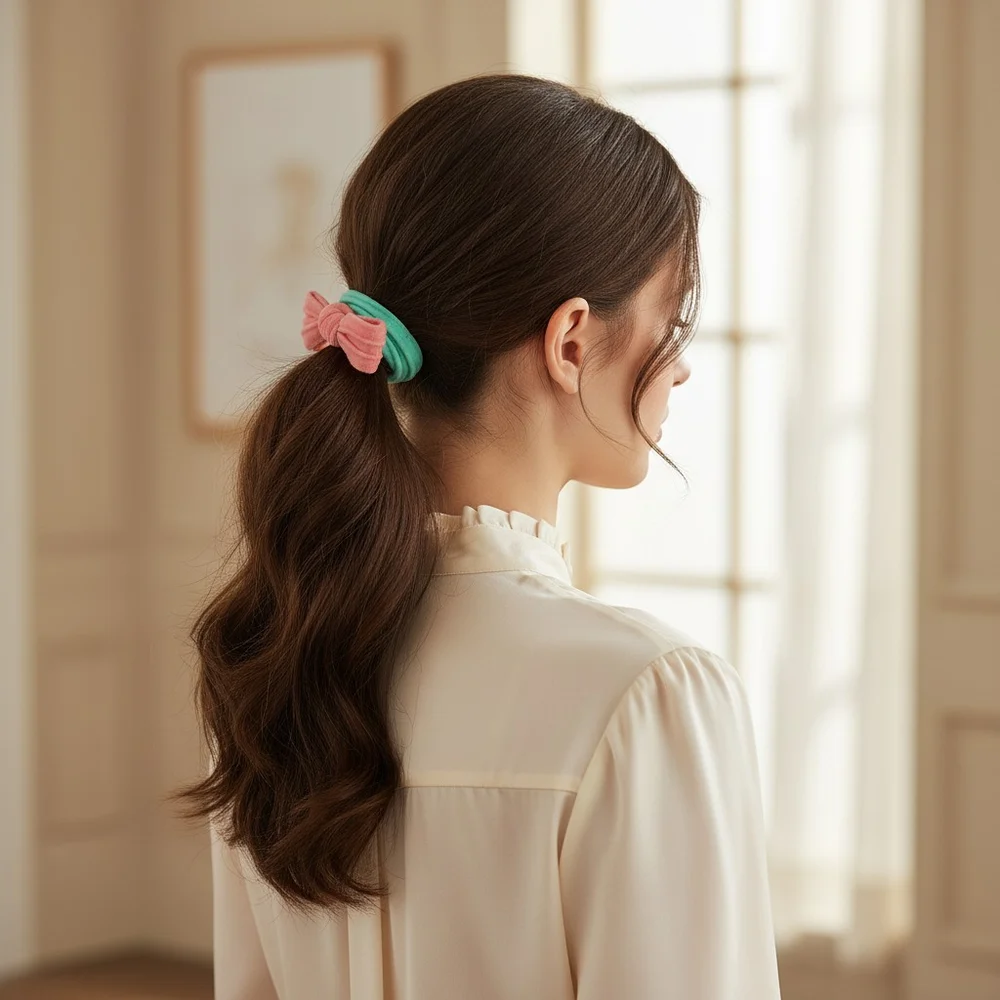
Not the big, maximalist bow. Not the coquette bow in satin pink. The understated one — grosgrain in ivory or black, tied at the nape, nothing excessive about it. The bow that your grandmother’s generation wore as a matter of course, and that is now being rediscovered by people who’ve grown tired of minimalism for its own sake.
Here’s why it works, and what to actually do with it.
What "Old Money" Is Actually Responding To
Before getting into the hair specifically, it’s worth understanding what the aesthetic is reacting to, because that shapes everything about how you approach it.
Old money — or quiet luxury, or whatever you want to call the broader sensibility — is partly a rejection of the visible logo. Of the idea that clothing and accessories should broadcast their cost or their brand. It values quality that reads through texture and cut rather than labeling, restraint as a form of confidence, and the general principle that things which are genuinely good don’t need to announce themselves.
Applied to hair, that means: no accessories that require explanation, no pieces that are trying too hard to be noticed, and a general preference for things that look considered rather than decorative.
The ribbon bow fits that framework perfectly. It’s old, it’s simple, it’s recognizable without being flashy. It also, crucially, requires some actual effort to wear well — which is its own quiet signal.
Why the Bow Specifically
Hair accessories in the old money aesthetic tend to be one of three things: a simple clip (tortoiseshell or plain gold), a fabric-covered elastic, or a bow. The bow is the most interesting of these because it walks the finest line between ornamental and practical.
A tortoiseshell clip reads as purely functional. A bow reads as a choice — but a particular kind of choice, one that references a specific history of careful dressing. There’s a reason you see versions of this accessory in photographs from the 1950s, 1960s, and 1970s — it was the default for a generation of women who wore their hair with a sense of quiet formality. The current iteration is that same impulse translated into a contemporary moment that has largely forgotten it.
What makes it work within the old money aesthetic specifically:
It’s fabric, not metal or plastic. The tactile quality of a ribbon bow — its softness, the way it moves — is in tune with the overall material sensibility of the aesthetic (cashmere, linen, real leather).
It’s understated by nature. A well-tied grosgrain bow at the nape of a low ponytail is the kind of accessory you notice without being able to say exactly why. That’s the old money register.
It suggests familiarity with older codes. There’s a literacy required to wear a bow in this way — you have to know that it doesn’t read as childish in this context, which requires some understanding of how it’s been worn historically. That knowledge itself is a signal.
The Specific Versions That Work
Not all bows are old money. Here’s what the aesthetic calls for:
Grosgrain in neutrals. Black, ivory, navy, dark green. Grosgrain has a matte texture and slight ribbing that looks inherently more serious than satin. It’s the fabric equivalent of good wool — no flash, but unmistakably quality.
Measured size. The loops should be present but not dramatic. A 3–4 inch bow is about right for most contexts. Bigger reads as a statement; the goal is understated.
Low placement. The nape or mid-head on a half-up look. High ponytails are not the aesthetic — they’re too animated for this particular register.
Clean tying. A bow with clean, slightly taut loops and moderate-length ends. Not too loose (reads careless), not too tight (reads overwrought). The loops should be roughly equal and the ends should hang rather than splay.
One bow, nothing else. This is important. Old money accessorizing is additive only up to a point. One well-chosen bow, no other hair accessories. The bow is the look.
How to Build the Full Look
If you’re putting together a hair look within this aesthetic, the bow is usually the last decision, not the first. You build toward it.
Start with the hair itself: smooth, either naturally straight or set neatly if your hair is wavy. Low ponytail or half-up are the two most versatile options. Bun for evenings or more formal contexts.
Then the bow: grosgrain, neutral, sized proportionally. Tied carefully.
The clothing does the rest of the work. A well-cut white shirt or a good knit already communicates the aesthetic; the bow is confirmation, not explanation.
The Longevity Argument
What makes this worth paying attention to beyond the current trend cycle is that the fundamental impulse behind it isn’t going anywhere. Minimalism — the strand of fashion design that dominated the 2010s — always contained within it a certain coldness, a refusal of warmth and detail. The old money aesthetic, and the bow as a part of it, represents an answer to that: you can have restraint and warmth at the same time. You can choose carefully and still be interested in beauty for its own sake.
The ribbon bow, at its best, is exactly that combination. Simple enough to be credible, considered enough to be interesting.
[Explore the bows that work for this aesthetic →]